
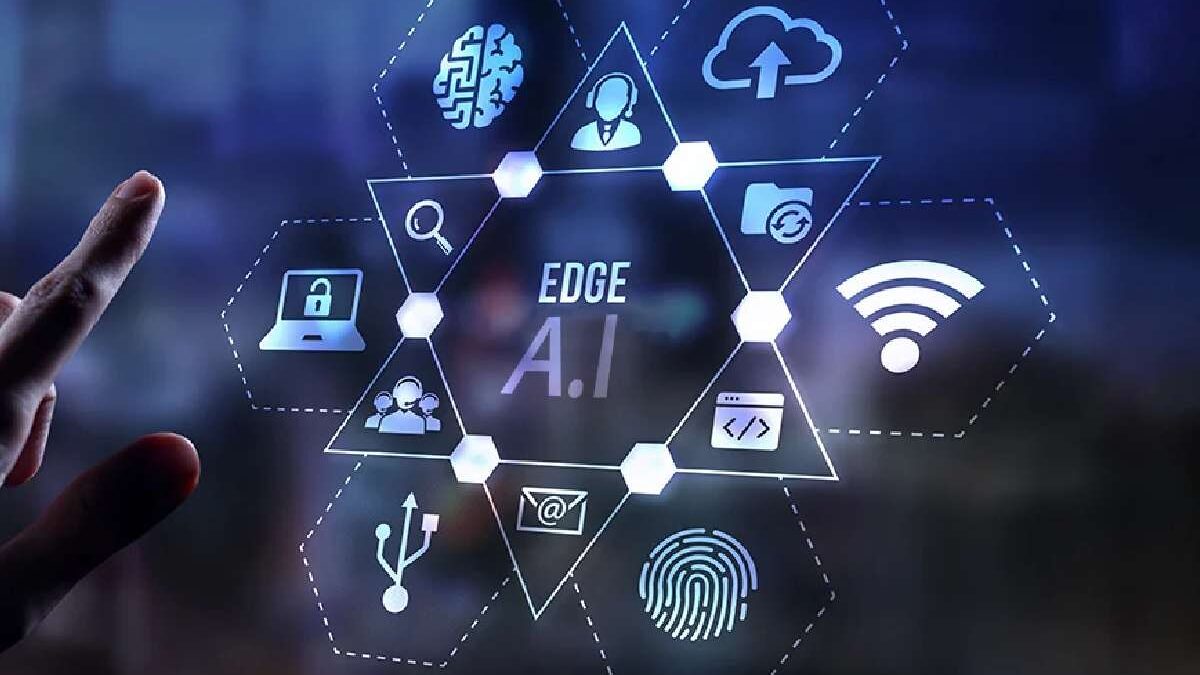
Edge AI devices process artificial intelligence workloads directly on or near the device where data is generated instead of sending it to the cloud. This approach reduces latency, improves privacy, and lowers bandwidth costs—making it particularly useful for Internet of Things (IoT) environments where real-time decisions are required.
According to market analysis from Grand View Research, the global edge AI market is expected to grow at a strong double-digit CAGR over the coming years as enterprises adopt smart automation, predictive analytics, and autonomous systems.
In simple terms:
- Cloud AI: Data → Cloud → Processing → Result
- Edge AI: Data → Local Device Processing → Instant Result
For industries such as manufacturing, healthcare, logistics, and retail, the difference between milliseconds and seconds can determine operational efficiency and safety.
This article explains the most practical edge AI use cases, recommended hardware devices, architecture patterns, and deployment strategies for IoT projects.
This Article Is Belongs To AI Applications
Table of Contents
Key Edge AI Use Cases in IoT
Edge AI is being deployed in multiple sectors because it enables real-time intelligence without relying on constant internet connectivity, reflecting broader AI trends in 2026 toward smarter and more autonomous systems.
1. Predictive Maintenance in Manufacturing
Industrial equipment generates massive amounts of sensor data such as vibration, temperature, and pressure. Edge AI models running on IoT devices can analyze this data in real time.
Example workflow:
- Sensors monitor machine behavior.
- Edge AI device runs anomaly detection models.
- System alerts operators before equipment failure occurs.
Benefits
- Prevents costly downtime
- Extends equipment lifespan
- Reduces maintenance costs
Factories implementing predictive maintenance often deploy embedded AI accelerators on industrial gateways to process vibration or acoustic signals locally.
2.Smart Cameras and Video Analytics
Traditional security cameras stream video to the cloud for analysis, which consumes bandwidth and introduces latency. Edge AI cameras can analyze video directly on the device.
Typical capabilities include:
- Facial recognition
- Object detection
- License plate recognition
- Crowd monitoring
Companies frequently use GPU-accelerated edge devices from vendors such as NVIDIA or AI-optimized chipsets from Qualcomm for computer vision tasks.
Advantages
- Real-time alerts
- Reduced network traffic
- Improved privacy
3. Wearables and Health Monitoring
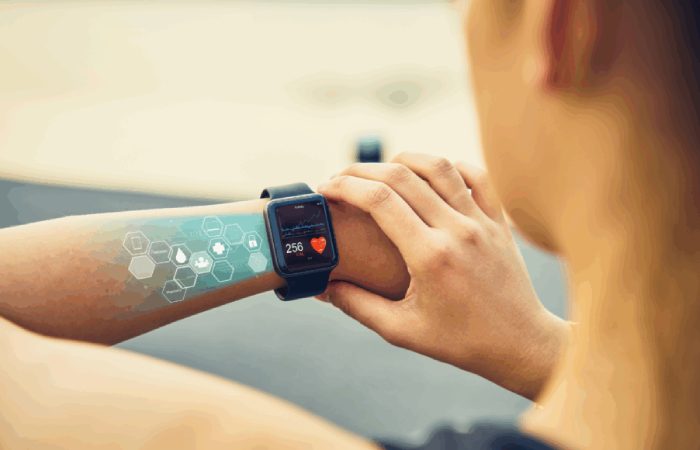
Healthcare wearables rely heavily on edge processing. Devices like smart watches and medical sensors continuously analyze biometric signals such as heart rate, oxygen levels, and sleep patterns.
Edge AI allows wearables to:
- Detect irregular heart rhythms
- Provide fitness insights
- Trigger emergency alerts
Local processing is critical because sending raw health data to cloud servers continuously would drain battery life and raise privacy concerns.
4. Retail Analytics and Smart Stores
Retail environments use edge AI to understand customer behavior in physical stores.
Common implementations include:
- Customer traffic heatmaps
- Queue length detection
- Inventory monitoring
Edge devices connected to cameras and sensors can analyze customer movement patterns in real time, enabling store managers to adjust staffing and product placement instantly.
5. Autonomous Vehicles and Robotics
Self-driving systems and robots cannot depend on cloud connectivity for safety-critical decisions.
Edge AI enables machines to:
- Detect obstacles
- Interpret sensor data
- Navigate environments
Autonomous systems require extremely low latency processing, often achieved using high-performance AI accelerators.
Edge AI Hardware Stack for IoT
Deploying edge AI requires a combination of sensors, processors, and software frameworks.
- Sensors
Sensors collect real-world data that feeds AI models. Typical sensor types include:
| Sensor Type | Use Case |
| Temperature sensors | Industrial monitoring |
| Cameras | Computer vision |
| Accelerometers | Motion detection |
| Microphones | Audio analytics |
| GPS modules | Location tracking |
Sensors transmit data to edge processors for analysis.
- Edge AI Processors (SoCs & NPUs)
Edge devices require specialized processors optimized for machine learning inference.
Common options include:
- GPU-accelerated processors
- Neural Processing Units (NPUs)
- AI-optimized System-on-Chips (SoCs)
Major vendors include:
- Intel
- NVIDIA
- Qualcomm
These chips are designed to perform neural network inference efficiently while consuming minimal power.
- Edge Gateways
Edge gateways act as intermediaries between sensors and cloud platforms.
Functions include:
- Data aggregation
- Protocol translation
- Local AI inference
- Secure connectivity
Gateways typically run lightweight operating systems such as Linux and support containerized workloads.
- Software Frameworks
Edge AI devices rely on machine learning frameworks optimized for embedded hardware.
Common tools include:
| Framework | Purpose |
| TensorFlow Lite | Lightweight ML inference |
| OpenVINO | Intel hardware optimization |
| ONNX Runtime | Cross-platform model execution |
| NVIDIA TensorRT | GPU inference optimization |
These frameworks allow developers to deploy trained models efficiently on constrained hardware, while AI-native development platforms can help streamline the development of intelligent applications.
Edge AI Device Comparison
Below is a simplified comparison of widely used edge AI hardware platforms.
| Device | Price Tier | AI Performance | Typical Use Case | SDK Support |
| NVIDIA Jetson Nano | Low | Moderate | Robotics, vision projects | CUDA, TensorRT |
| NVIDIA Jetson Xavier NX | Mid | High | Autonomous systems | CUDA, DeepStream |
| Intel Neural Compute Stick 2 | Low | Moderate | Edge vision inference | OpenVINO |
| Qualcomm RB5 Platform | High | High | Drones, robotics | Qualcomm AI SDK |
| Google Coral Dev Board | Low | Moderate | Vision and IoT | Edge TPU SDK |
Each device targets different deployment scales—from hobbyist prototypes to industrial automation systems. For a broader look at consumer-focused AI hardware, explore these best AI gadgets in 2026.
Integration Patterns for Edge AI in IoT
Deploying edge AI requires careful architecture design.
Data Pipeline
A typical edge AI pipeline follows these steps:
- Data collection from sensors
- Pre-processing on edge gateway
- Model inference on edge device
- Event detection
- Cloud synchronization
The cloud still plays a role for model training, long-term storage, and analytics. (Coral)
Security Considerations
IoT environments must prioritize device security.
Key practices include:
- Secure boot
- Encrypted communication
- Hardware-based key storage
- Device authentication
Without strong security controls, compromised edge devices can expose sensitive operational data.
Offline Updates and Model Deployment
Edge AI systems often operate in remote environments with limited connectivity.
Therefore they require:
- Over-the-air firmware updates
- Model version control
- Rollback capabilities
Many companies deploy updates using containerized environments such as Docker.
Cost and Deployment Checklist
Before implementing an edge AI system, organizations should evaluate several technical and financial factors.
Deployment Checklist
- Define the Use Case
- What decision must happen in real time?
- What latency is acceptable?
- Evaluate Hardware Constraints
- Power consumption
- Processing performance
- Environmental conditions
- Select AI Framework
- Compatibility with chosen hardware
- Model size limitations
- Plan Data Architecture
- Edge vs cloud storage
- Data retention policies
- Consider Scalability
- Number of devices deployed
- Remote management tools
Real-World Edge AI Case Studies
Smart Factory Monitoring
Manufacturers deploy AI-enabled sensors to monitor motors and production equipment.
Edge AI models detect anomalies such as:
- unusual vibration patterns
- temperature spikes
- mechanical faults
This allows maintenance teams to intervene before equipment failures occur.
Traffic Monitoring Systems
Cities use edge AI cameras to analyze road traffic patterns in real time.
Capabilities include:
- vehicle counting
- accident detection
- congestion analysis
Processing video locally reduces the need to stream massive amounts of footage to centralized servers. (Grand View Research)
Agricultural Automation

Farmers deploy IoT sensors combined with edge AI to monitor crops and soil conditions.
Applications include:
- plant disease detection
- irrigation optimization
- livestock monitoring
Edge analytics enable decisions even in rural areas with poor internet connectivity.
Recommended Edge AI Vendors
When selecting edge AI hardware, enterprises should evaluate vendors based on performance benchmarks and ecosystem support.
Key companies include:
- NVIDIA
- Intel
- Qualcomm
Benchmarks to Request from Vendors
- AI inference throughput (TOPS)
- Power consumption
- SDK and framework support
- Long-term hardware availability
- Security capabilities
Comparing these metrics helps determine the best platform for production deployments.
Frequently Asked Questions
What is an edge AI device?
An edge AI device is hardware capable of running machine learning inference locally rather than relying on cloud computing. These devices often include GPUs, NPUs, or AI-optimized processors.
Why is edge AI important for IoT?
IoT devices generate large volumes of real-time data. Processing this data at the edge reduces latency, bandwidth usage, and privacy risks.
Can edge AI replace cloud computing?
No. Edge AI and cloud AI typically work together. The cloud is used for training models and large-scale analytics, while edge devices handle real-time inference.
What industries benefit most from edge AI?
Industries with real-time decision requirements benefit the most, including:
- manufacturing
- healthcare
- retail
- transportation
- agriculture
Conclusion
Edge AI is becoming a foundational technology for modern IoT systems. By processing data locally, organizations can achieve real-time intelligence, reduce bandwidth costs, and improve privacy.
As adoption grows, companies must carefully evaluate hardware platforms, software frameworks, and deployment strategies to build scalable edge AI infrastructure. With the right architecture, edge AI devices can transform IoT networks into intelligent, autonomous systems capable of making decisions where the data is created.