
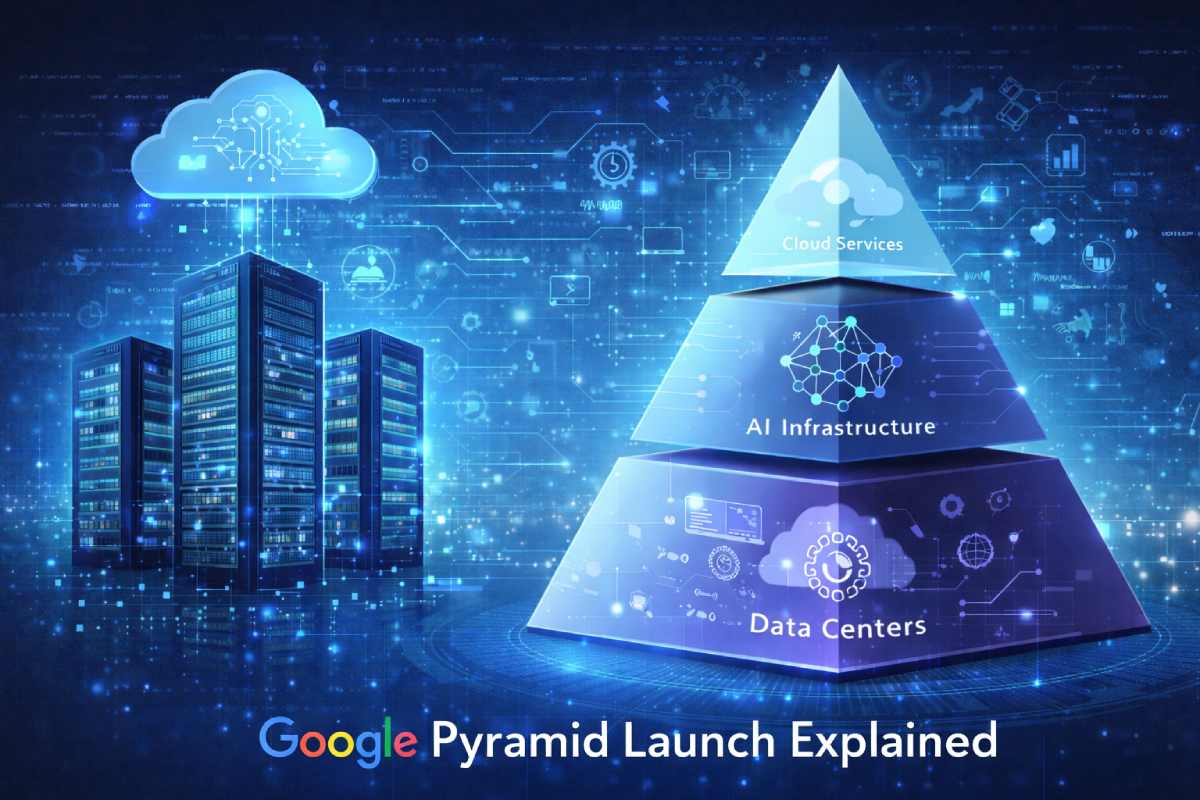
The term Google Pyramid Launch has recently gained attention in technology discussions. While Google hasn’t officially branded a product under this exact name, analysts often associate it with Project Pyramid, a major data center infrastructure expansion linked to Google’s AI and cloud growth strategy.
This initiative reflects a broader shift in the tech industry: companies are investing heavily in data centers, AI infrastructure, and cloud platforms to support the rapidly growing demand for artificial intelligence, digital services, and global connectivity.
Understanding this development helps businesses, developers, marketers, and tech enthusiasts stay ahead of future digital trends.
Table of Contents
Understanding the Google Pyramid Concept
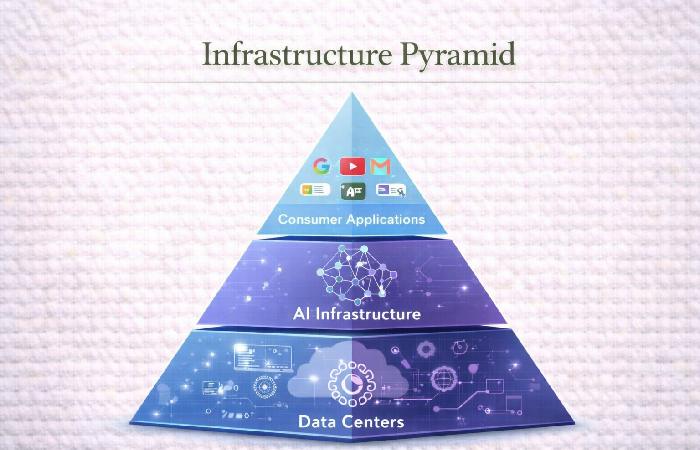
Google’s infrastructure strategy can be visualized as a pyramid:
Base Layer
Data centers, servers, networking, storage.
Middle Layer
AI models, analytics engines, cloud computing.
Top Layer
Consumer applications:
- Search
- YouTube
- Google Workspace
- AI assistants
- Cloud SaaS products
This layered architecture explains why infrastructure investment is so critical.
Without a strong base, advanced AI services cannot scale.
Project Pyramid Data Center Overview
One of the most discussed developments is a large data center campus in West Memphis, Arkansas, associated with Google.
Key details include:
- Five major data center buildings
- Over 1,000 acres of land
- Multi-billion-dollar investment
- Renewable energy integration
- Focus on AI cloud workloads
The project represents a significant expansion in hyperscale computing infrastructure.
Technology Drivers Behind the Launch
AI Growth Is Exploding
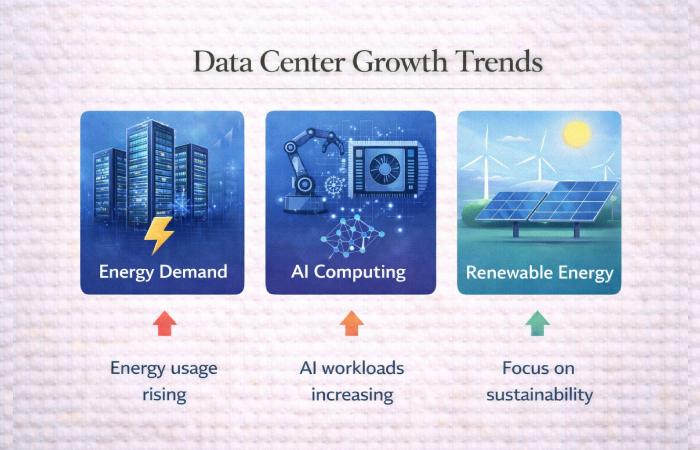
AI requires enormous computational power.
Modern AI workloads demand:
- High-performance GPUs
- Advanced cooling systems
- Massive data storage
- Ultra-fast networking
Data centers that once used 30 MW are now commonly 200 MW or larger due to AI demands.
Energy Demand Is Increasing Rapidly
Google’s data center electricity consumption has doubled in recent years due to the expansion of AI.
This highlights:
- Rising infrastructure costs
- Sustainability challenges
- Increased innovation in energy efficiency
Global Data Center Growth Statistics
Cloud Infrastructure Market Data
| Metric | Value |
| Global cloud data center electricity use | ~460 TWh |
| Share of global electricity | ~2% |
| Google Cloud efficiency improvement | ~7.3% annually |
| Renewable energy matching | 100% electricity |
These numbers show how massive cloud infrastructure has become.
Hyperscaler Competition
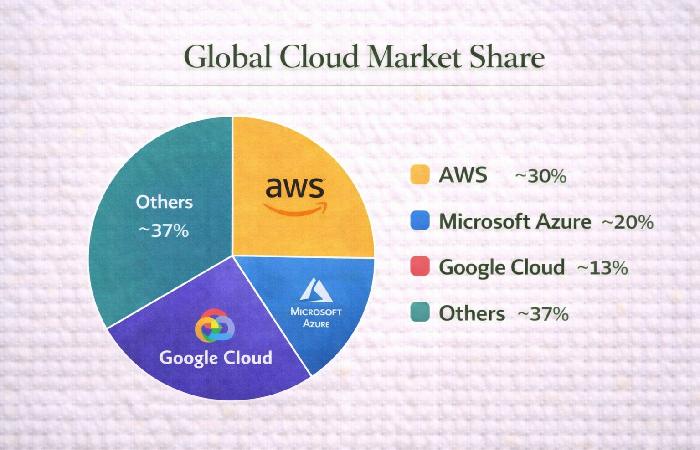
| Company | Cloud Market Share | AI Focus |
| AWS | ~30% | AI chips + cloud |
| Microsoft Azure | ~20% | OpenAI partnership |
| Google Cloud | ~13% | TPU + Gemini AI |
| Others | ~37% | Mixed players |
This competition drives constant infrastructure investment.
Business Impact of the Google Pyramid Launch
For Enterprises
Businesses gain:
- Faster cloud computing
- Improved analytics
- AI automation tools
- Global scalability
This reduces operational costs and improves productivity.
For Developers
Developers benefit from:
- Better APIs
- Faster machine learning deployment
- Advanced cloud computing capabilities
This accelerates innovation.
For Consumers
End users’ experience:
- Faster search results
- Smarter AI assistants
- Improved app performance
Most people benefit without even noticing the infrastructure.
Digital Transformation Impact Chart
| Area | Impact |
| Automation | Reduced manual work |
| Marketing | Global reach |
| Analytics | Better decisions |
| Cloud | Scalability |
| AI Tools | Productivity boost |
This shows how infrastructure affects everyday technology.
Environmental Considerations
AI infrastructure raises sustainability questions.
Projected trends:
- Data center electricity demand may reach ~945 TWh by 2030
- Cooling efficiency and renewable energy are key solutions
- Advanced cooling systems can reduce energy use by up to 50%
Sustainable infrastructure is now a priority.
Economic Benefits of Large Data Centers
Major data center projects:
- Create jobs
- Boost local economies
- Improve digital infrastructure
- Attract tech investments
For example, Project Pyramid is expected to significantly increase regional economic activity.
Challenges Facing Google Infrastructure Expansion
Energy Consumption
AI servers consume significant electricity.
This increases:
- Operational costs
- Environmental concerns
- Infrastructure complexity
Privacy and Data Security
More data processing means:
- Greater security responsibilities
- Increased compliance requirements
Competition Pressure
Google competes with:
- Amazon AWS
- Microsoft Azure
- Emerging AI cloud providers
This pushes continuous innovation.
Future Trends Connected to Google Pyramid
AI Infrastructure Expansion
Expect:
- Larger data centers
- More renewable energy use
- Specialized AI hardware
Edge Computing Growth
Processing data closer to users reduces latency.
Cloud Ecosystem Development
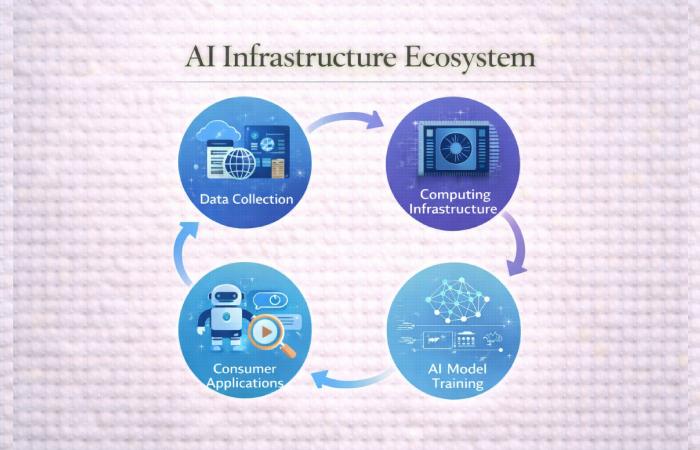
Cloud services will:
- Expand globally
- Become more affordable
- Integrate deeper AI capabilities
Practical Business Takeaways
If you run a business or tech project:
Focus on Cloud Adoption
It reduces infrastructure costs.
Invest in AI Tools
Automation improves efficiency.
Monitor Digital Trends
Infrastructure changes affect markets.
Build Data Skills
Data analytics drives decision-making.
FAQ Section
Is Google Pyramid an official Google product?
No. It’s an industry term related to infrastructure expansion.
Why does Google invest in data centers?
To support AI, cloud computing, and digital services.
Will this affect regular internet users?
Yes — indirectly through faster services and smarter apps.
Is AI infrastructure sustainable?
Companies are investing heavily in renewable energy solutions.
Conclusion
The Google Pyramid Launch reflects a broader shift toward AI-driven infrastructure, cloud expansion, and global digital transformation. Large data center investments are shaping the future of technology by enabling faster computing, smarter AI services, and more scalable digital platforms.
For businesses and developers, understanding this trend is crucial. Infrastructure expansion influences everything from cloud pricing to AI innovation and digital marketing performance.
As AI continues to grow, initiatives like Project Pyramid will likely become the backbone of tomorrow’s digital economy.