


Which Helps a Firm to Grow and Expand — Complete Guide
Business growth is essential for long-term success. Every firm, whether a startup or established company, aims to grow, increase profits, and expand into new markets. But growth doesn’t happen automatically. It requires planning, innovation, investment, and smart management.
In today’s competitive environment, companies must adopt modern strategies, use technology effectively, and understand market trends to expand successfully. This guide explains what helps a firm grow, key factors influencing expansion, and practical strategies businesses can use.
Table of Contents
Understanding Business Growth
Business growth refers to an increase in a company’s size, revenue, customer base, or market reach. Growth can happen in many ways:
- Increasing sales
- Expanding products or services
- Entering new markets
- Improving operational efficiency
Growth is important because it improves financial stability, strengthens brand value, and ensures long-term survival.
Key Factors That Help Firms Grow
Several internal and external factors influence business expansion.
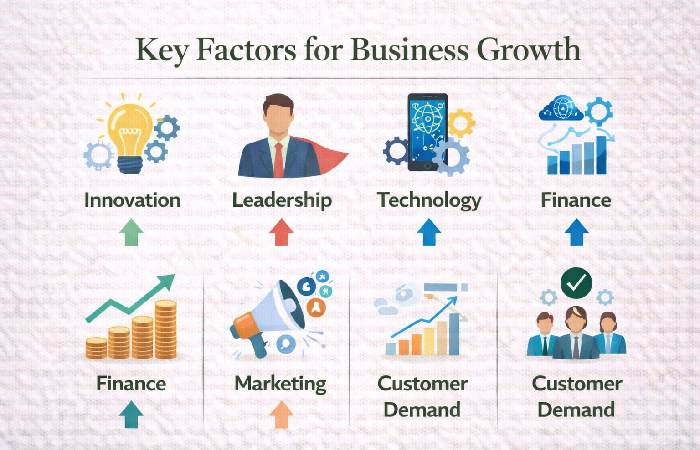
Important ones include:
- Innovation and new ideas
- Customer demand
- Access to capital
- Strong leadership
- Technology adoption
- Market opportunities
Companies that combine these factors effectively tend to grow faster and more sustainably.
Role of Technology in Expansion

Technology plays a major role in modern business growth.
Benefits include:
- Automation improves productivity
- Data analytics supports decision-making
- Online marketing increases reach
- Digital platforms enable global expansion
Businesses that adopt technology early often gain competitive advantages.
Cloud computing, artificial intelligence, and digital marketing tools are now essential for scaling companies efficiently.
Leadership and Management Importance
Strong leadership is critical for growth.
Good leaders:
- Set clear goals
- Motivate employees
- Make strategic decisions
- Encourage innovation
Companies with skilled managers often adapt better to market changes and growth opportunities.
Leadership also shapes company culture, which affects employee performance and productivity.
Market Demand and Customer Growth
Demand drives expansion.
If customers want a product:
- Sales increase
- Production expands
- Revenue grows
Understanding customer needs helps businesses create better products.
Customer satisfaction also leads to repeat business and referrals, supporting long-term growth.
Financial Strength and Investment
Growth requires money.
Businesses need funds for:
- Marketing campaigns
- Technology adoption
- Hiring staff
- Infrastructure development
Access to capital allows companies to invest in growth opportunities and scale operations effectively.
Poor financial planning can limit expansion even if demand exists.
Innovation and Product Development
Innovation is one of the strongest drivers of business growth.
Companies grow when they:
- Introduce new products
- Improve existing services
- Develop new business models
Innovation helps companies stay competitive and relevant.
Research and development investment is especially important in technology industries.
Strategic Partnerships and Collaboration
Partnerships accelerate growth.
Examples include:
- Joint ventures
- Supplier partnerships
- Technology collaborations
These partnerships help firms access:
- New markets
- Expertise
- Resources
Collaboration reduces risk and speeds expansion.
Marketing and Brand Building
Brand recognition increases customer trust.
Effective marketing strategies include:
- Digital marketing
- Social media campaigns
- SEO content marketing
- Influencer partnerships
Strong branding makes a business memorable and competitive.
Marketing also helps companies enter new markets successfully.
Global Expansion Opportunities
Many companies grow by expanding internationally.
Global expansion offers:
- Larger customer base
- Increased revenue potential
- Competitive advantage
However, companies must consider:
- Cultural differences
- Regulations
- Market demand
Technology makes global expansion easier than ever.
Challenges in Business Growth
Growth isn’t always smooth.
Common challenges:
- Financial risks
- Market competition
- Operational complexity
- Workforce management
Companies must plan carefully to overcome these challenges.
Proper strategy reduces risks.
Practical Growth Strategies for Modern Firms
Here are proven strategies:
- Market Penetration
Focus on increasing sales in existing markets.
- Product Development
Introduce new products.
- Market Expansion
Enter new geographic markets.
- Diversification
Add different products/services.
- Technology Integration
Use automation and analytics.
These strategies help firms scale sustainably.
Frequently Asked Questions
What is the most important factor for business growth?
Innovation, leadership, and customer demand are key factors.
How does technology help firms grow?
Technology improves efficiency, marketing reach, and decision-making.
Can small businesses grow quickly?
Yes, with proper strategy, funding, and market demand.
Why is innovation important?
Innovation keeps companies competitive and relevant.
Conclusion – Which Helps a Firm Grow and Expand
Business growth depends on multiple factors, including innovation, leadership, financial strength, technology adoption, and market demand. Firms that understand these factors and implement strategic plans are more likely to expand successfully.
Modern businesses must focus on technology, customer experience, and continuous improvement to stay competitive. Growth requires patience, smart decisions, and adaptability.
By combining strong leadership, innovation, and effective marketing, any firm can achieve sustainable expansion.