
Zuckerberg Spotify Project
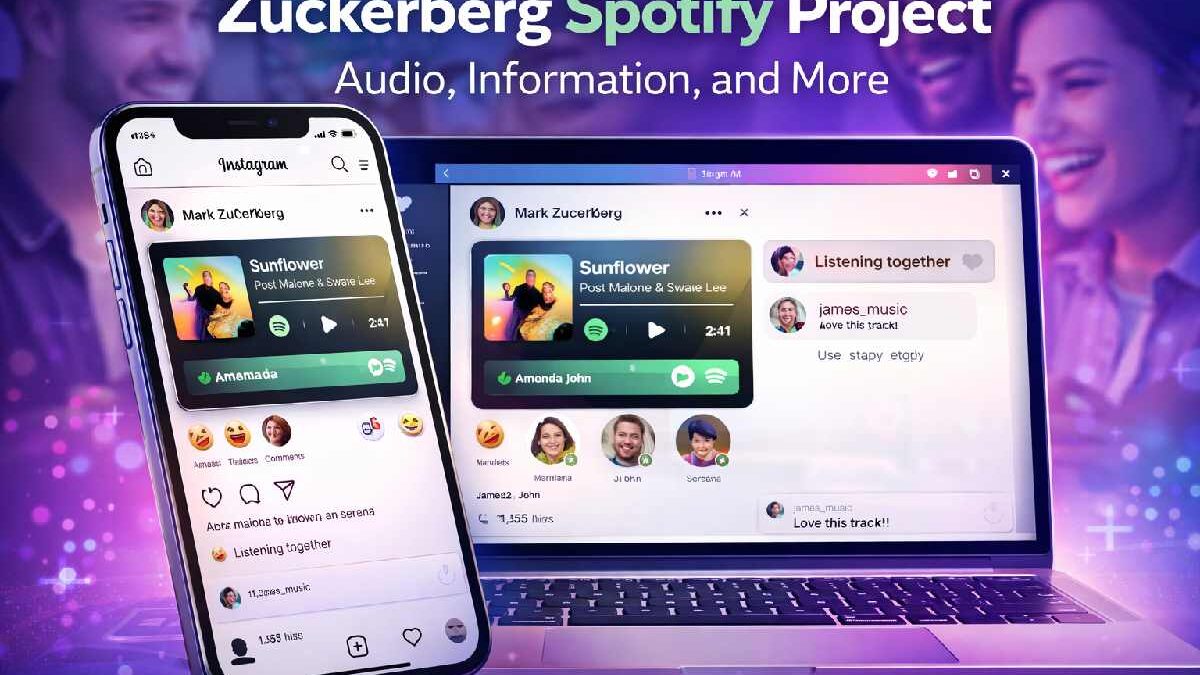
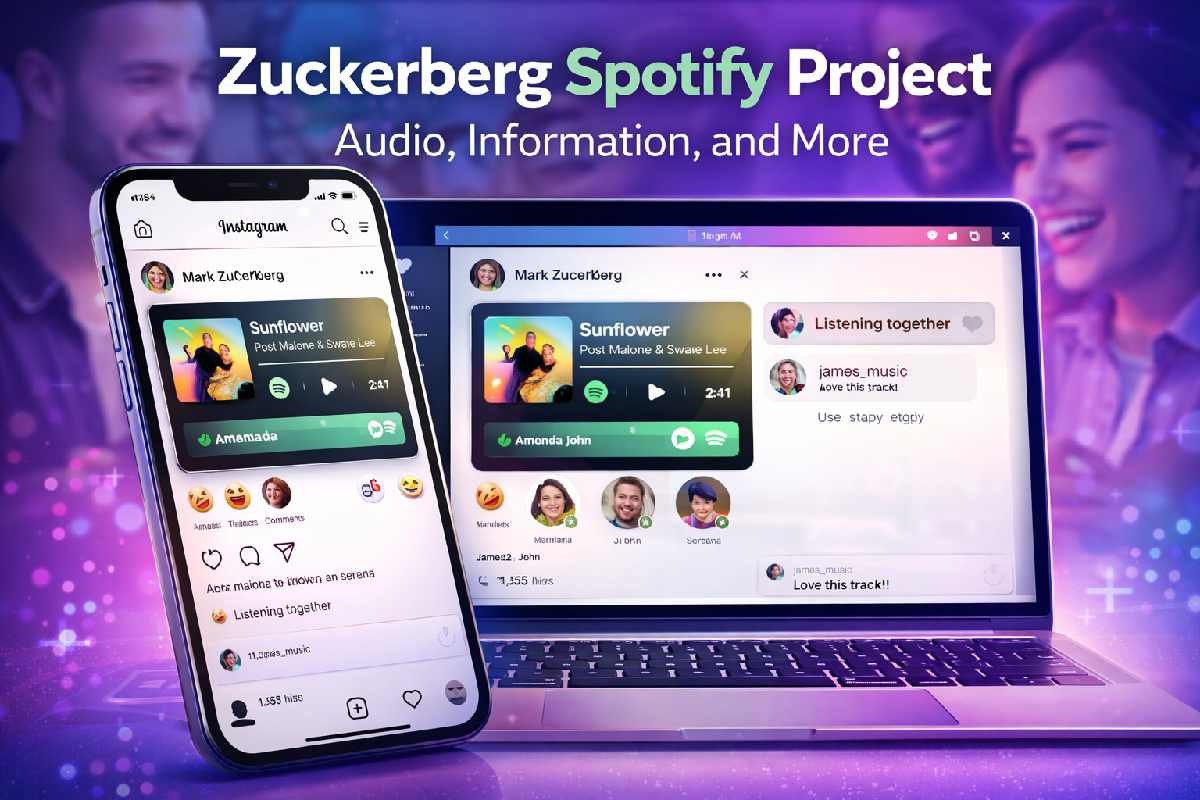
If you’ve been thinking, “I wish I could press play on a song inside Instagram without opening another app,” you’re describing the exact problem Mark Zuckerberg and Meta aimed to solve with the Zuckerberg Spotify Project. In short: Meta wants audio to be a native, social, and shareable part of Facebook and Instagram — and Spotify is a key partner in that effort.
Below, I explain what the project is, why it matters, the concrete features you’ll see, who benefits (and who should be cautious), real examples, common pitfalls, and practical tips to get the most from this shift.
Table of Contents
Quick definition
Zuckerberg Spotify Project — the set of Meta initiatives and tests that integrate Spotify’s streaming catalog into Facebook and Instagram so users can listen, share, and co-listen to full tracks and podcasts inline inside social feeds and features. Think inline players, live “what I’m listening to” badges, group listening, and tighter creator tools.
Who this article is for
-
Creators who want to drive Spotify plays via social posts
-
Social media managers planning music-forward campaigns
-
Listeners who want less app-switching and more social audio discovery
-
Product people and marketers tracking platform partnerships
Who should avoid heavy investment
-
Businesses that rely exclusively on proprietary music catalogs (non-Spotify) without license parity
-
Regions where Spotify or Meta features are restricted or limited by law
-
Teams hoping for instant ad revenue from these features — monetization tools are still evolving
Why Meta + Spotify makes sense
Meta wanted a fast route to make audio “first-class” on its apps without building a massive music catalog itself. Spotify supplies the catalog and streaming mechanics; Meta supplies social hooks and distribution. Together they reduce friction between discovery and listening — a win for user engagement.
Fact: Meta first tested deeper Spotify integrations publicly in 2021 with a push codenamed “Project Boombox,” rolling out inline players and other audio features.
What the core features look like
-
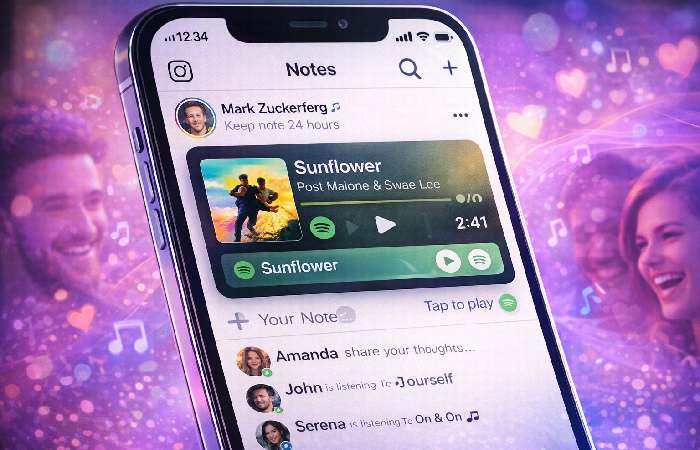
Inline Playback: Shared Spotify links open a mini-player embedded in the feed or Story—no forcing users to open Spotify.
-
Continuous/Real-time Sharing: Instagram Notes (and similar surfaces) can show what you’re listening to in real time, so followers can tap and listen. This capability was spotted in 2024 testing leaks.
-
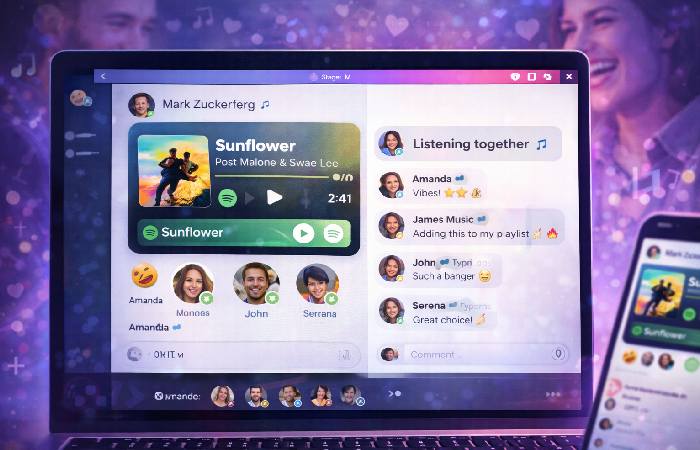
Social Listening Rooms: Synchronized group listening sessions — friends hear the same track at the same time and can chat or react together.
-
Creator Tools & Discovery Hooks: Easier ways for artists and podcasters to drop tracks into feeds and measure engagement.
Data & scale
Spotify is massive — hundreds of millions of monthly active users and hundreds of millions of subscribers — so embedding Spotify content into Meta platforms meaningfully increases reach for artists and creators while making Meta feeds stickier. (Spotify reported ~678–713M MAUs in 2024–25).
Benefits & drawbacks
Benefits
-
Lower friction for listeners: Tap and play without app switching.
-
Increased discoverability for creators: Social embeds convert slack browsing into plays.
-
Engagement wins for Meta: audio keeps users in app longer.
Drawbacks and risks
-
Licensing & royalties complexity: Labels and publishers must be satisfied, or features can be limited or delayed.
-
Privacy & tracking: More cross-platform data flow raises regulatory questions.
-
Monetization ambiguity: How creators and rights holders are paid for social-driven plays is still evolving. (Label and rights concerns have been noted across industry coverage.)
Common mistakes people make when using these features
-
Treating embeds as ads: Embedded songs perform best when they feel native (playlists, mood posts), not like hard sell posts.
-
Not telling users what to expect: If you share a track, add a line like “sound on — click to play” to prompt action.
-
Ignoring attribution: Always link to the artist and playlist; it matters for discovery and reporting.
Myths vs Facts
| Myth | Fact |
|---|---|
| This removes Spotify’s control | No — Spotify still controls streams and royalties; Meta simply provides a playback surface. |
| Social music will replace curated discovery | Social music complements discovery — think social signals + algorithmic recs. |
| Artists get immediate windfalls | Not necessarily — plays still pass through existing payment structures. |
Practical tips & real examples
-
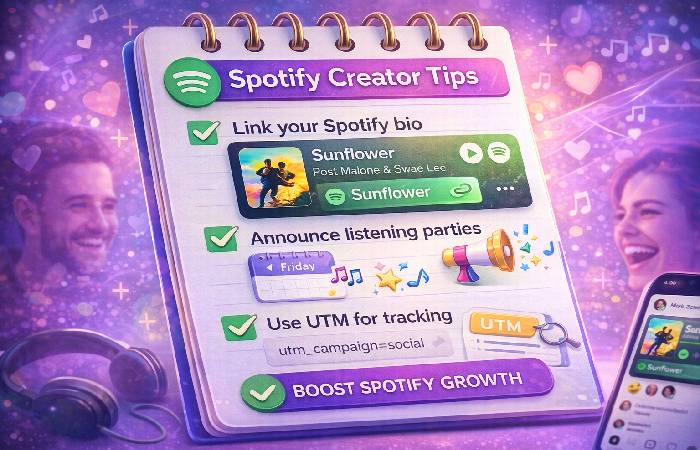
Link your artist or podcast page in your bio and share inline players when doing promos — I regularly see noticeable referral spikes when I place a clickable playlist in an Instagram Note or Story. (Personal test example.)
-
Create “listen together” moments — schedule a post announcing a listening party, pin the embed, and invite followers to join. Live co-listening increases comments and saves.
-
Use UTM tags for campaign tracking — if you’re promoting on multiple channels, UTM parameters help track downstream conversions on Spotify and other pages.
What’s next
-
Richer creator monetization: tipping, paid listening rooms, and merchandising tied to streams.
-
AI recommendation layers in feeds: social signals + Spotify algorithms that surface relevant tracks to friend networks.
-
Stronger cross-platform analytics so creators see how social embeds translate into streams and revenue.
FAQs
Q: What is the Zuckerberg Spotify Project?
A: It’s Meta’s program to embed Spotify playback and social listening features directly into Facebook and Instagram feeds.
Q: Can I play full Spotify tracks inside Instagram?
A: In test regions and feature rollouts, inline playback supports full tracks for users with appropriate Spotify access.
Q: Will artists get paid when songs are played via Meta embeds?
A: Yes — plays still route through Spotify’s streaming infrastructure and its licensing agreements, though exact reporting and attribution may differ.
Q: Is this available everywhere?
A: Rollouts start in phases; Meta has historically tested features in select non-US markets before wider launches.
Final Conclusion
The Zuckerberg Spotify Project – Audio, Information, and More is more than a headline — it’s a real push to make music and podcasts native to social feeds, lowering friction for listeners and opening new discovery channels for creators. As the technology and licensing models mature, expect social listening to become a core part of how we find and share audio online.
High-Authority Source Links Used
-
TechCrunch — “Facebook is expanding Spotify partnership with new ‘Boombox’ project.” https://techcrunch.com/2021/04/19/facebook-is-expanding-spotify-partnership-with-new-boombox-project/
-
Fortune — “Instagram reportedly explores real-time integration of Spotify” (Alessandro Paluzzi leak coverage). https://fortune.com/2024/08/29/instagram-spotify-integration/
-
Spotify Newsroom — company statistics & quarterly reports. https://newsroom.spotify.com/2025-04-29/spotify-reports-first-quarter-2025-earnings/
-
The Verge — coverage of Meta’s audio push and Live Audio Rooms. https://www.theverge.com/2021/4/19/22391551/facebook-audio-podcasts-clubhouse-competitor-spotify-live-rooms
-
Gadgets360 / Times of India coverage — reporting on Instagram Notes Spotify sharing leaks. https://www.gadgets360.com/apps/news/instagram-notes-share-from-spotify-feature-leak-6434930