

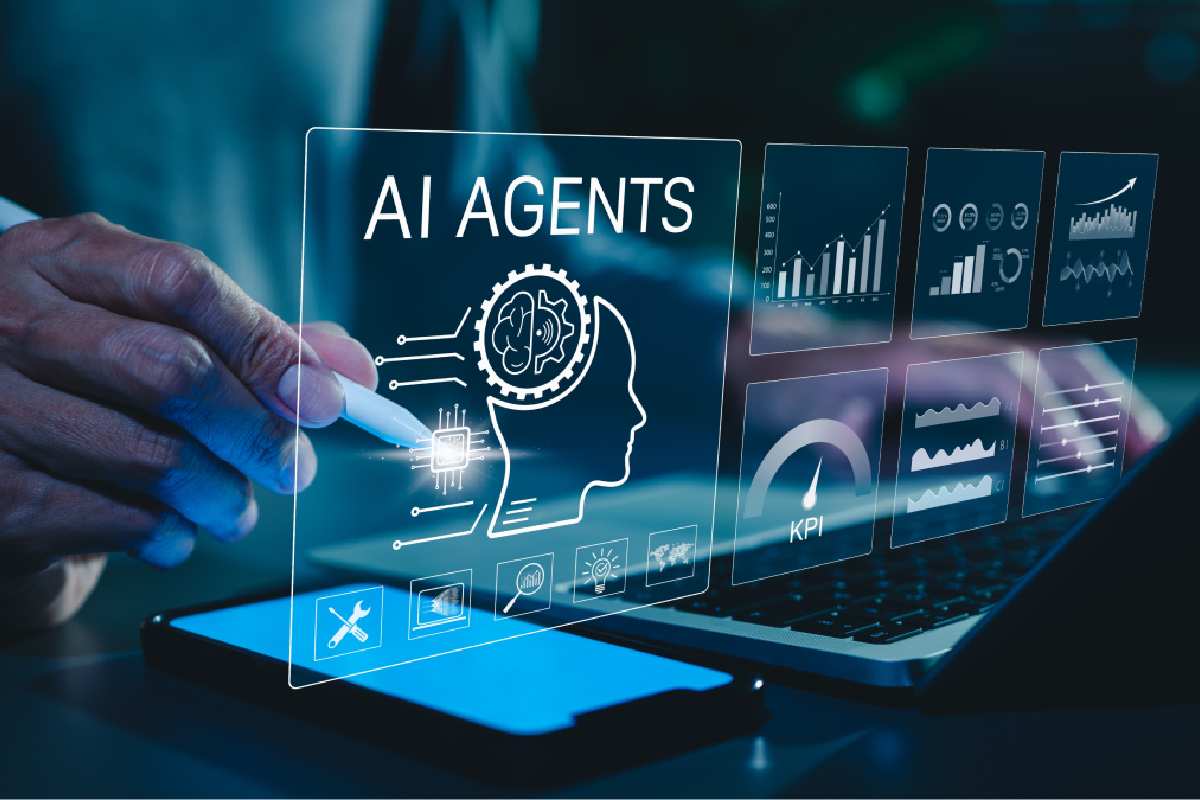
Agentic AI & Autonomous Agents
Let me be real with you. We’ve been talking about artificial intelligence for years now, but 2026 is different. This is the year AI stops being something you ask questions to and becomes something that actually does the work for you. No more waiting for a response. No more copying and pasting outputs. This is agentic AI, and it’s about to change everything.
I know that sounds like hype. Trust me, I’m skeptical of hype too. But the numbers don’t lie, and neither do the companies already using this stuff. So let’s break down what agentic AI actually is, why it’s different from everything we’ve seen before, and what it means for your job, your business, and your future.
Related Topics: Learn how to Career Change to Tech in 90 Days to prepare for AI careers, master 15 Essential Tech Skills to Learn in 2026 that include AI fundamentals, or explore Best AI Gadgets 2026 to see AI in action.
This Article Is Belongs To AI Automation
Table of Contents
What is Agentic AI? (And Why It’s Not Just Another Chatbot)
Here’s the thing about ChatGPT and other generative AI tools: they’re great at responding. You ask, they answer. That’s it. You’re still in control. You’re still doing most of the work.
Agentic AI is the complete opposite. Instead of responding to your prompts, agentic AI systems perceive what’s happening, think through a plan, and then take action—all without you telling them every single step.
Think about it this way. If traditional AI is a really smart assistant sitting at a desk waiting for instructions, agentic AI is a colleague who notices problems, figures out solutions, and gets stuff done before you even ask.
Here’s what makes agentic AI different:
-
It doesn’t wait for you to tell it what to do. It sees a problem and starts working on it.
-
It can break down big, complicated goals into smaller tasks. Then it does them in the right order.
-
It uses tools and apps. It can send emails, update spreadsheets, query databases, schedule meetings—whatever it needs to do to finish the job.
-
It learns from what happens. Every time it completes a task, it gets a little smarter about how to handle similar situations next time.
-
It can work with other AI agents. Multiple agents can team up to handle massive, complex projects that no single agent could manage alone.
In simple terms: Agentic AI doesn’t generate answers. It achieves outcomes.
Why 2026 Is The Year Everything Changes
I get it. We’ve had “the next big AI thing” hyped every year for the past few years. So why should you care about this one?
Because for the first time, analysts across the entire industry agree on something: agentic AI is the most significant trend in 2026, not just in tech but in how business gets done.
Here’s what makes this moment different:
The numbers are real. Gartner predicts that 15% of day-to-day work decisions will be made autonomously by AI agents by 2028. Right now, it’s basically zero. That’s not incremental improvement—that’s transformation.
It’s moving from experiments to production. In 2024 and 2025, most agentic AI was stuff companies were testing in labs. But Deloitte research shows that by the end of 2026, real organizations are shipping actual, working systems that handle real business processes. That’s not a pilot anymore. That’s the future showing up.
Every enterprise software company is jumping in. Salesforce, Microsoft, Google, Amazon, IBM—all the big names are embedding agentic capabilities into their platforms. If these companies are betting billions on it, it’s worth paying attention to.
The competitive pressure is real. Organizations that figure out agentic AI first will move faster, cost less, and respond quicker than their competitors. This isn’t some nice-to-have feature. This is “we need this or we get left behind” territory.
How Agentic AI Actually Works (The Real Mechanics)
I want to walk you through how this actually happens, because understanding the mechanics makes everything else make sense.
Think of agentic AI operating in a loop. A continuous cycle of:
1. Perception (Looking Around)
The agent starts by gathering information. It might read an email, check a spreadsheet, scan a database, monitor a system. It’s basically asking: “What’s the current situation?”
2. Reasoning (Thinking It Through)
Now the agent analyzes what it found. It compares it to its training, its memory of past situations, and the goal it’s trying to achieve. It asks itself: “What does this information mean? What patterns do I see? What’s the best move?”
3. Planning (Mapping the Route)
The agent breaks the goal into steps. If the goal is “close this customer support ticket efficiently,” the plan might be: Check the issue → Look up the customer history → Gather relevant information → Draft a solution → Send it → Log the resolution. It figures out the sequence.
4. Action (Doing the Work)
Here’s where agentic AI actually shows its power. It doesn’t just instruct you; it acts. It sends emails, updates systems, creates documents, and performs real actions within actual systems.
5. Learning (Reflecting & Improving)
The agent checks the outcome. “Did that work?” If yes, great. If no, it adjusts its approach and adds that lesson to its memory for next time.
Then it loops back and does it all again for the next task.
This cycle repeats continuously. The agent is always monitoring, always ready to act, always learning. That’s what makes it fundamentally different from the “wait for a prompt” approach of traditional AI.
Real-World Examples (This Is Happening Right Now)
Let me show you what this actually looks like in practice, because abstract concepts are fine but real examples hit different.
Toyota’s Supply Chain Agent:
Toyota’s supply chain team used to stare at 50 to 100 mainframe screens every single day. A person had to manually track vehicles from pre-manufacturing through delivery, watch for delays, and fix problems. It was insane. Now, an agentic AI system does all of that automatically. It monitors everything in real time, spots delays before the human team even arrives, and drafts solutions. The agent can handle the work before the employee starts their shift. The outcome? Faster deliveries, fewer bottlenecks, and a team that can focus on strategy instead of screen-staring.
HPE’s Internal Review Agent (Called Alfred):
Performance reviews at a big company are a nightmare. Tons of data, complex analysis, lots of nuance. HPE created an AI agent named Alfred that handles the end-to-end process. It breaks down review queries into components, pulls data from multiple systems, builds charts, and creates reports that actual humans can understand. One agent, multiple complex tasks, completely autonomous. What used to take weeks now takes days.
Insurance Claims at Mapfre:
An insurance company doesn’t trust robots with everything (and that’s smart). But they use agentic AI for routine stuff: processing damage assessments, updating claim status, flagging issues. What takes a human hours takes an agent minutes. For complex situations or anything touching customer communication, a human gets involved. It’s hybrid by design.
Moderna’s Digital Workforce Shift:
Biotech company Moderna did something wild. They created a position called “Chief People and Digital Technology Officer.” They merged HR with IT because they realized: we need to plan work the same way, whether a human or an AI is doing it. That’s the future. You’re not replacing workers. You’re redesigning how work gets done.
These aren’t science projects anymore. These are actual companies getting actual results.
What Agentic AI Can Actually Do (And What It Can’t)
Here’s where I have to be honest about the limitations, because pretending everything is perfect is how you make bad decisions.
Agentic AI is amazing at:
-
Repetitive processes. If something follows a pattern, agents crush it. Customer support routing, invoice processing, data entry, scheduling—boring stuff that needs consistency.
-
Multi-step workflows. Anything that involves multiple systems or stages. Agents can coordinate across your CRM, your email, your database, and your accounting software all at the same time.
-
Continuous monitoring. Agents never sleep. They’re always watching. Security threats? Detected. Anomalies in data? Caught. Deadlines approaching? Flagged.
-
Fast decision-making. Agents don’t need coffee breaks. They don’t get tired. They process thousands of situations and make decisions in seconds.
Agentic AI struggles with:
-
Creative work that requires human judgment. An agent isn’t going to understand why your brand voice matters or what kind of photo will resonate with your audience.
-
Handling genuine ambiguity. If the situation is unclear or the goal is fuzzy, agents can get confused. Humans are much better at saying “I need clarification here.”
-
Ethical decisions. An agent can follow rules, but it can’t really understand nuance around fairness or what’s the right thing to do in edge cases. That’s still human territory.
-
Building genuine relationships. Customers want to talk to a person about their serious problems, not an AI agent. Your agent can handle the paperwork and escalation, but the human relationship stuff? That’s irreplaceable.
The smartest organizations aren’t trying to replace humans with agents. They’re using agents to handle the stuff humans hate doing, freeing humans up to do the stuff that actually matters.
The Three Big Problems Companies Are Hitting
Before you get too excited about deploying agentic AI at your organization, here are the three walls everyone’s slamming into right now.
1. Legacy Systems Won’t Play Along
Your company probably has software that’s been around for years. Old databases. Strange APIs. Systems that weren’t designed to talk to AI agents. Gartner says over 40% of agentic AI projects will fail by 2027 because of legacy system incompatibility. You can’t just layer agents on top of systems that aren’t built for this. You have to actually upgrade the infrastructure.
2. Your Data Is a Mess
For agentic AI to work, it needs data it can actually use. But a lot of companies have data scattered across different systems, in inconsistent formats, without clear labels. An agent can’t reason effectively if the data is garbage. You have to go through the boring, unglamorous work of cleaning, organizing, and labeling data. A lot of companies are avoiding this and it’s killing their agent projects.
3. Nobody Knows How To Control It
If an agent is making decisions autonomously, what happens when something goes wrong? Who’s responsible? How do you audit what it did? Traditional governance systems weren’t built for this. You need new frameworks for oversight, new ways to track decisions, new ways to handle the accountability. And a lot of organizations haven’t figured this out yet.
Companies that solve these three problems first will have massive advantages. Companies that ignore them will have expensive failures.
What This Means For Your Job (Honest Conversation)
Let me be direct: agentic AI is going to change what you do at work. Not immediately, but definitely coming.
The jobs that are going to change the most are the ones that are mostly routine:
-
Data entry and processing
-
Administrative tasks and scheduling
-
Routine customer support
-
Compliance checking
-
Report generation
-
Data analysis and dashboard creation
If your day is mostly repetitive, following established processes, then yeah—an AI agent is probably going to handle part of that. That doesn’t mean you’re gone. It means your job is going to change.
What’s happening at the smartest companies:
They’re not firing people. They’re repurposing them. The person who used to spend 4 hours a day entering data now spends those 4 hours on strategy, planning, and solving complicated problems. Your agent handles the grunt work. You handle the thinking.
Some roles will just disappear—that’s honest. But new roles are opening up too. Someone must oversee the agents to ensure they function properly, determine when human intervention is necessary, and continuously improve and retrain them.
The real risk isn’t automation. It’s falling behind. The people who figure out how to work alongside agents will be more valuable than people who don’t.
The Tools & Platforms Building This
If you want to actually work with agentic AI, here’s where the action is happening.
OpenAI’s Agent Frameworks: Building on GPT-4, they’re making it easier to create agents that can reason, plan, and take actions. This is accessible to developers.
Anthropic’s Model Context Protocol (MCP): A standard that tells AI agents how to connect to tools, data, and other systems. Think of it like a universal translator for agents.
Salesforce Agentforce: If you’re in sales or customer service, Salesforce is embedding agents directly into your CRM. It’s not some external tool—it’s baked in.
Google’s Vertex AI Agent Builder: Google’s approach is letting enterprises build agents without coding, using their cloud infrastructure.
Microsoft Azure AI Agent Service: Similar to Google, but in the Microsoft ecosystem. If you’re already on Azure, this is your play.
Autonomous Frameworks (Open Source):
-
CrewAI: Lets you build multi-agent systems where agents collaborate
-
AutoGPT and BabyAGI: Early frameworks for autonomous agents
-
LangGraph: Building complex agent workflows
The landscape is still moving fast. New tools come out every month. But the main players (OpenAI, Google, Microsoft, Anthropic, Salesforce) are all investing heavily because they see this as the next massive revenue opportunity.
What To Do About This Right Now
If you’re reading this and wondering, “okay, this is real, but what steps should I take?” here’s my honest advice:
If you’re a business leader:
-
Start mapping your processes. The companies winning with agents first are the ones who understand their own workflows. Where is time wasted? Where do decisions take forever? Start there.
-
Pick one focused pilot. Don’t try to automate your entire company. Find one process where agents could deliver obvious value and prove it works.
-
Get your data house in order. This is boring but essential. Clean your data. Label it. Organize it. This is the unglamorous work that determines if your agents succeed or fail.
-
Think about integration. Your legacy systems matter. Figure out how agents are going to interact with them. This is a technical problem but also an organizational problem.
And if you work in technology or want to:
-
Learn how to build with agents. Take a course on CrewAI, LangGraph, or OpenAI’s agent frameworks. This is a skill that’s going to be incredibly valuable.
-
Understand agentic architecture. How do agents integrate with databases? How do you set up orchestration? How do you monitor and evaluate agent performance? These are the questions people are asking.
-
Get comfortable with governance. How do you audit agent decisions? How do you set up human oversight? How do you handle when an agent makes a mistake? This is where a lot of value exists.
If you’re an employee:
-
Don’t panic, but do adapt. Your role is changing, but that doesn’t mean it’s disappearing. Learn how to work alongside agents. Learn how to use them effectively. Learn what kinds of decisions actually need human judgment.
-
Develop judgment skills. The jobs that survive are the ones that require real human judgment, creativity, and relationship-building. Double down on those.
-
Stay curious. Read about agentic AI. Play with the tools. Understand what’s happening. Knowledge is protection.
The Bottom Line
Agentic AI is the most significant AI trend for 2026 because it’s moving from “neat research” to “actual business transformation.”
We’re no longer in the era of AI as a tool you consult. We’re entering the era of AI as a worker. An autonomous colleague that handles routine work, makes decisions within defined boundaries, and gets faster and smarter every day.
This isn’t the future anymore. This is happening right now. The question isn’t “will agentic AI matter?” The question is “will you figure out how to leverage it before your competitors do?”
The organizations that master agentic AI—that redesign their processes, upgrade their infrastructure, and figure out human-agent collaboration—those organizations will define their industries. The ones that ignore it will find themselves struggling to keep up.
2026 is the year of agentic AI and autonomous agents. Not because it’s hyped. Because it actually works, and companies are already betting billions on it.
The only question is: are you ready?