
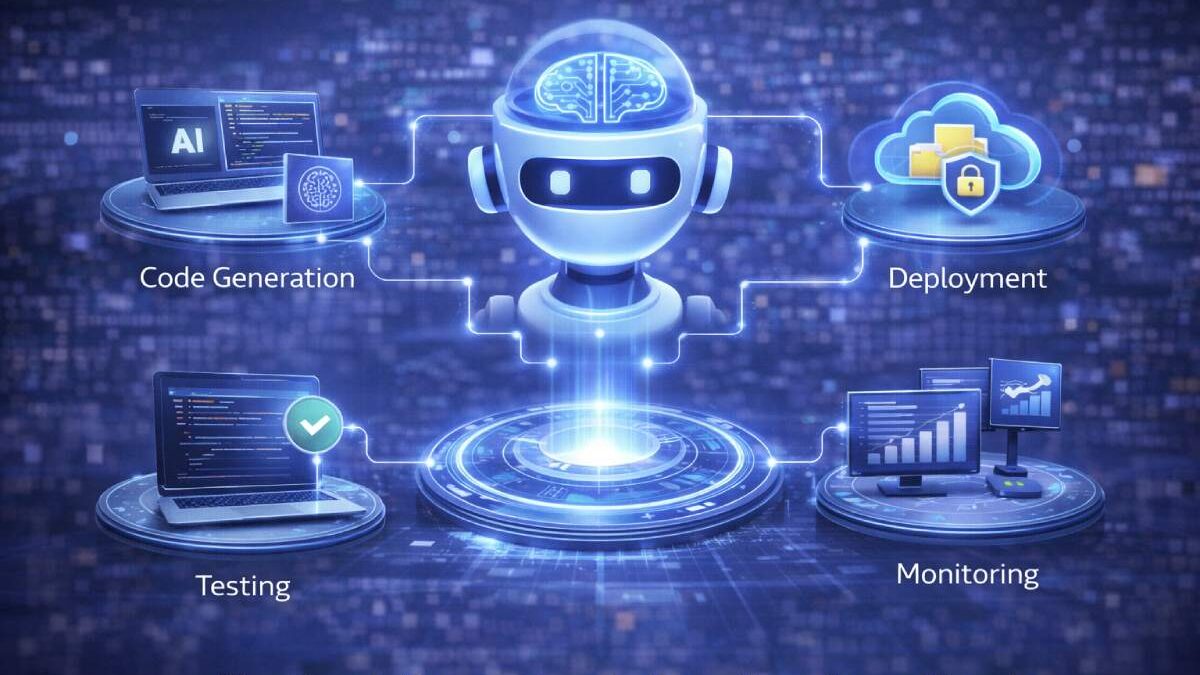
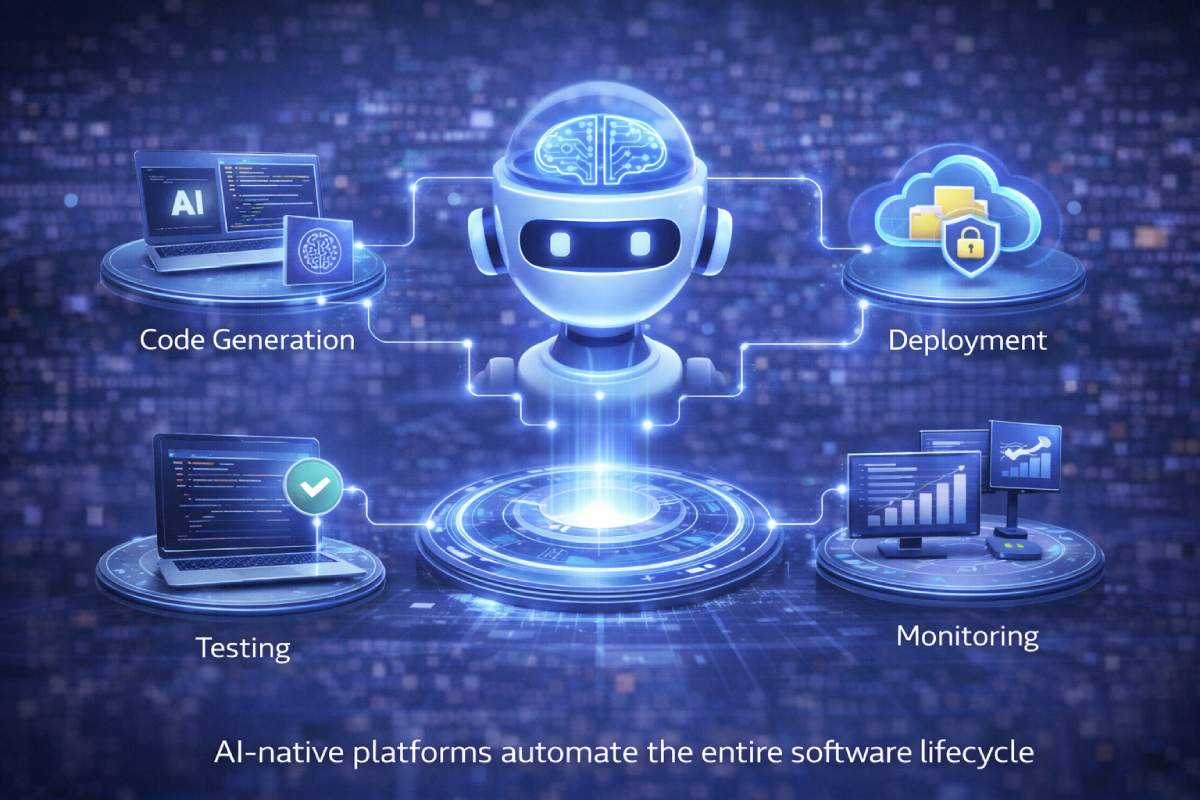
AI-Native Development Platforms Explained: The Future of Software Engineering Infrastructure
Software development is undergoing one of its biggest transformations in decades.
Until recently, AI tools worked like assistants.
In 2026, they are becoming platform layers inside the development lifecycle itself.
These systems are called:
This Article Is Belongs To AI Applications
AI-native development platforms
Instead of helping developers write code faster, they help organizations:
- design applications
- test systems automatically
- enforce security policies
- manage deployments
- monitor performance
- maintain compliance workflows
from a single intelligent environment.
This article explains:
- what AI-native development platforms are
- how they differ from copilots
- why enterprises are adopting them
- what developers should learn next
- how they reshape engineering teams
Analysts identify AI-native development platforms as a strategic enterprise infrastructure shift replacing traditional copilots in the software lifecycle.
Table of Contents
Quick Overview: What Makes a Platform “AI-Native”
Traditional tools:
assist developers
AI-native platforms:
coordinate development itself
Key characteristics:
| Capability | Traditional Dev Tools | AI-Native Platforms |
| Code generation | Partial | Full lifecycle |
| Test automation | External tools | Built-in |
| Deployment pipelines | Manual setup | Automated |
| Compliance checks | Separate workflow | Embedded |
| Security scanning | Optional | Continuous |
This shift changes how software gets built.
Why AI-Native Platforms Matter in 2026
Enterprise architecture forecasts identify these platforms as strategic infrastructure layers rather than optional productivity tools.
Reasons include:
- rising software complexity
- smaller engineering teams
- faster release expectations
- regulatory pressure
- AI integration requirements
Organizations now want platforms that manage software delivery automatically.
AI-Native Platforms vs AI Coding Assistants
Many people confuse these two.
They are not the same.
| Feature | Copilot Tools | AI-Native Platforms |
| Suggest code | Yes | Yes |
| Manage repositories | Limited | Yes |
| Generate architecture | No | Yes |
| Automate deployment | No | Yes |
| Enforce security policy | No | Yes |
Copilots help developers.
AI-native platforms help engineering organizations.
Core Components Inside AI-Native Development Platforms
Modern platforms include multiple intelligent layers.
1. Code Generation Engines
Generate:
functions
modules
test suites
documentation
based on requirements instead of templates.
2. AI Testing Pipelines
Automatically create:
unit tests
integration tests
regression tests
before production deployment.
This reduces QA bottlenecks significantly.
3. Security Automation Layers
Built-in scanners detect:
credential leaks
dependency risks
compliance violations
early in development cycles.
Security becomes proactive instead of reactive.
4. Deployment Orchestration Systems
Platforms now automate:
environment provisioning
CI/CD configuration
release scheduling
rollback strategies
This replaces manual DevOps pipelines.
5. Governance Engines
Enterprise adoption requires:
audit logs
policy enforcement
model monitoring
access control layers
AI-native platforms centralize governance.
Why Enterprises Are Replacing Traditional Dev Pipelines
Traditional pipelines look like this:
IDE → Git → CI/CD → Security scan → Deployment
AI-native pipelines look like this:
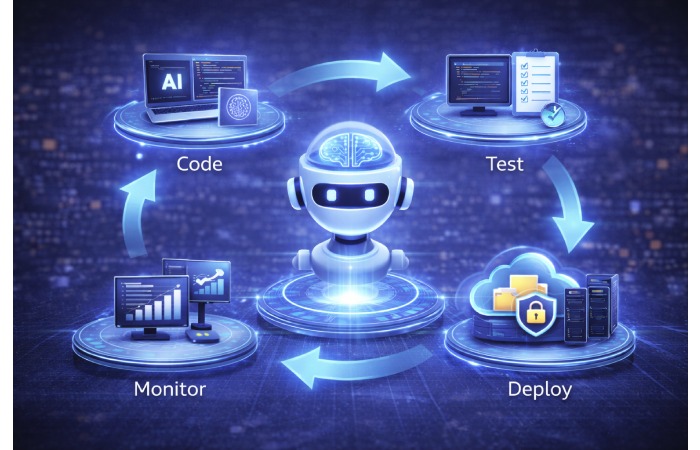
Requirement → Platform → Generated system → Tested → Deployed
Fewer manual steps.
Faster iteration cycles.
Lower infrastructure overhead.
Gartner lists AI-native development platforms among the most important strategic technology trends shaping enterprise infrastructure decisions in 2026.
The Rise of “Forward-Deployed Engineers”
One of the newest engineering roles emerging alongside AI-native platforms:
Forward-Deployed Engineers (FDEs)
These engineers:
embed with teams
customize platform workflows
translate business logic into infrastructure automation
Demand for these roles has increased dramatically during the AI adoption wave.
This signals a shift from coding roles to system-orchestration roles.
How AI-Native Platforms Reduce Development Costs
Cost savings appear across multiple layers.
| Area | Cost Impact |
| Testing | Lower |
| Deployment | Lower |
| Maintenance | Lower |
| Security auditing | Lower |
| Documentation | Lower |
Automation replaces repetitive engineering tasks.
Multi-Agent Systems Powering Platform Workflows
Many AI-native platforms rely on:
multi-agent orchestration
These agents handle:
testing
deployment
optimization
monitoring
Enterprise automation increasingly depends on coordinated agent systems rather than single AI assistants.
Confidential Computing Enables Secure AI Development Platforms
Security concerns previously slowed adoption.
Now:
confidential computing protects data during processing itself.
This allows enterprises to run sensitive workloads safely inside AI-native pipelines.
Domain-Specific Language Models Improve Accuracy
Generic models struggle with specialized workflows.
AI-native platforms increasingly use:
domain-specific language models (DSLMs)
These models deliver:
better compliance
better reliability
lower hallucination risk
Analysts predict over half of enterprise GenAI models will be domain-specific within a few years.
Physical AI Integration Expands Platform Capabilities
AI-native development is expanding beyond software.
Platforms now support:
Platforms now support:
robotics
industrial automation
sensor pipelines
real-world device orchestration
This category is known as:
robotics
industrial automation
sensor pipelines
real-world device orchestration
physical AI infrastructure.
What Developers Should Learn Next
To work effectively with AI-native platforms:
learn:
prompt-structured architecture
API orchestration
cloud pipelines
security automation
container workflows
Coding alone is no longer enough.
What This Means for Software Teams
Engineering teams are becoming:
smaller
faster
more cross-functional
Platforms now automate:
testing
documentation
deployment
monitoring
This changes team structure permanently.
What This Means for Startups
Startups benefit most from AI-native development platforms.
Advantages:
faster MVP creation
lower infrastructure costs
smaller engineering teams
faster iteration cycles
Tiny teams can now ship enterprise-grade systems.
What This Means for Enterprises
Enterprises gain:
policy enforcement
deployment consistency
security automation
compliance visibility
These platforms reduce operational complexity at scale.
Common Misconceptions About AI-Native Platforms
Misconception:
They replace developers.
Reality:
They replace repetitive workflows.
Developers move toward architecture roles instead.
Risks Organizations Must Plan For
Adoption challenges include:
model reliability
governance gaps
integration complexity
training requirements
Successful adoption requires planning.
Who Should Learn About AI-Native Development Platforms
Ideal readers:
developers
DevOps engineers
platform engineers
startup founders
technical architects
FAQs
What is an AI-native development platform?
A platform that embeds AI across the entire software lifecycle.
Are these replacing DevOps?
They are transforming DevOps workflows.
Do developers still need coding skills?
Yes — but orchestration skills are becoming equally important.
Are enterprises adopting these platforms now?
Yes. Adoption is accelerating across industries.
Conclusion
AI-native development platforms represent one of the most important shifts in modern software engineering infrastructure. By integrating generative AI into testing, deployment, governance, and architecture workflows, these platforms allow organizations to build applications faster, safer, and more efficiently than traditional pipelines. As adoption expands across startups and enterprises alike, understanding AI-native development platforms is becoming essential knowledge for developers preparing for the next generation of software engineering.